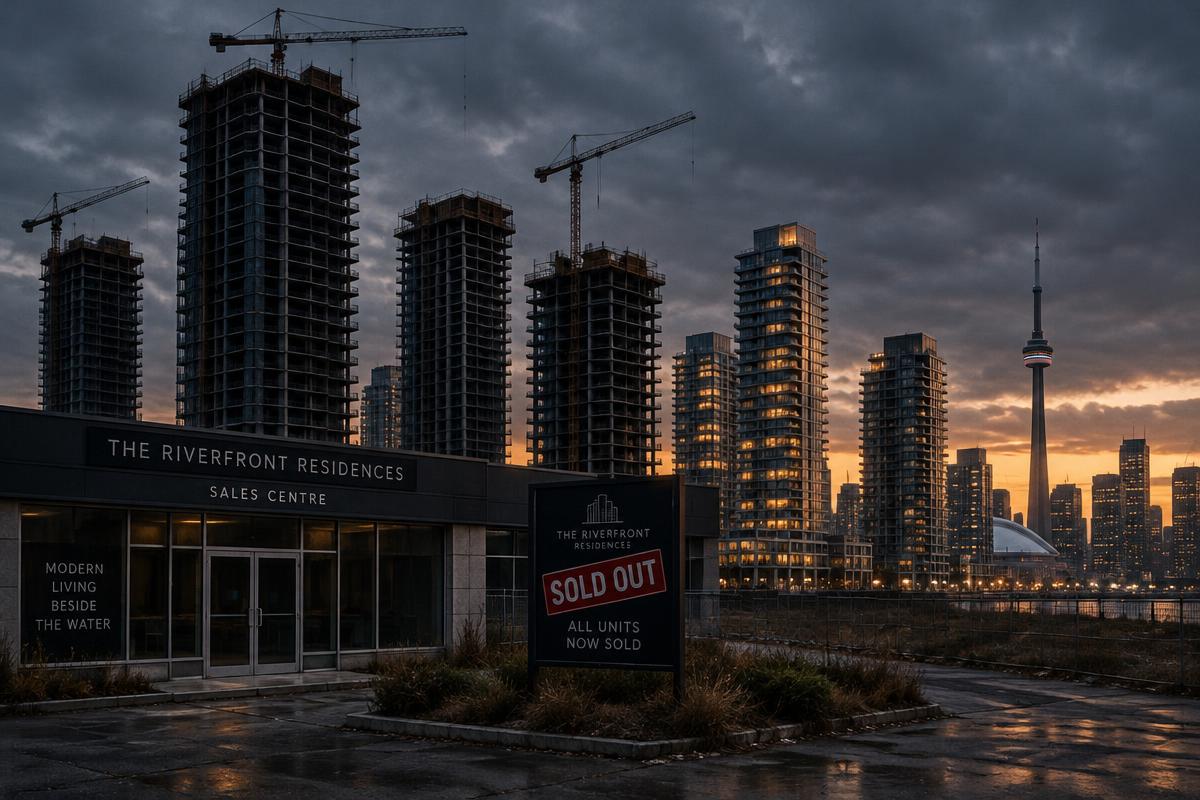
It is easy to look at Canada’s condo market and see good news. Roughly 5,000 unsold new units sit in the Greater Toronto-Hamilton area, with a similar volume of unsold condos and townhouses in Greater Vancouver. After years of bidding wars, inventory sounds like relief. The Globe and Mail’s editorial board argued this week that the relief is an illusion — and we agree. The surplus is not a sign of health; it is the first symptom of the next shortage.
The numbers behind the curtain are stark. Only 156 condo units began construction in Toronto in the first half of 2026, and according to Urbanation, not a single new GTA condo project began selling units during that period. Construction is the pipeline that delivers homes three to five years from now. When the pipeline runs dry, the shortage does not announce itself immediately — it arrives on schedule, later, when the cranes are gone and cannot be summoned back quickly.
The cause is structural. Canadian condo development runs on pre-construction sales: builders must sell most of a project before lenders will finance construction. When investors retreat and end-users balk at prices, projects cannot reach their sales thresholds, and nothing gets built. A model that depends on buyers committing years before delivery is a model that seizes up precisely when the market turns — which is to say, precisely when housing supply is most needed.
Governments have spent two years announcing measures to accelerate homebuilding, and most of those measures assume the private market will do the building. This moment tests that assumption. If the market will not build through a downturn, then policy has to change the economics: purpose-built rental incentives, revised lending rules that reduce reliance on pre-sales, and direct public or non-profit construction to fill the gap the market is leaving.
None of this means the unsold units should be ignored — they are an opportunity for buyers and a problem for developers holding them. But a country that has spent a decade failing to build enough homes cannot afford to mistake a glut of one housing type in two metropolitan areas for abundance. The cranes standing idle today are the missing homes of 2030. The time to act is while the shortage is still hypothetical, not after it has arrived.
opinionOpinionCanada