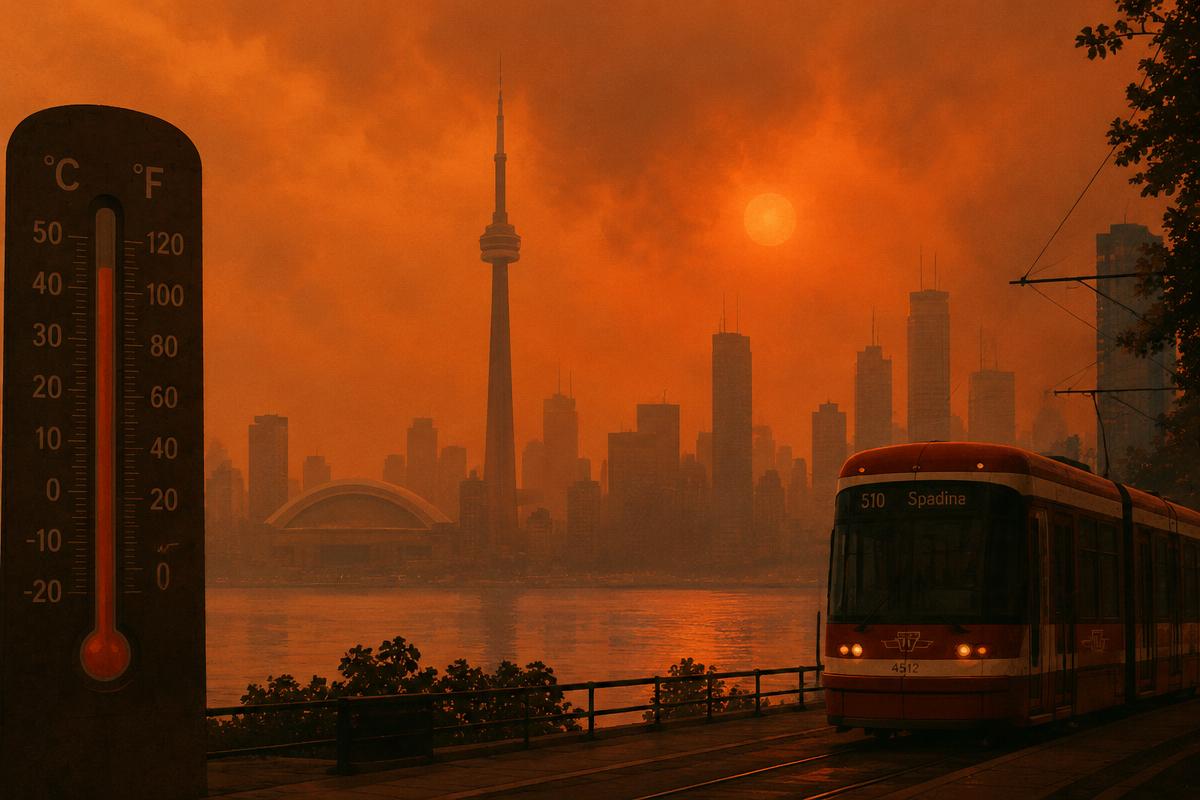
This is an opinion piece by The Canadian’s editorial board. The country’s leading health organizations released a sober set of numbers this week. Drawing on new Canadian data from the 2026 Lancet Countdown, the Canadian Medical Association, Canadian Nurses Association and Canadian Public Health Association report that wildfire smoke was associated with an estimated 3,951 deaths a year between 2021 and 2025, nearly four times the annual toll of a decade earlier.
Heat tells a similar story. Infants and adults aged 65 or older experienced an average of 10 heatwave days a year over the same period, roughly 90 per cent more than two decades ago. Transport-related air pollution was associated with about 3,500 deaths from fine particulate matter in 2023, when fossil fuels supplied 94 per cent of road-transport energy. These are not projections about a distant future; they describe the present.
The organizations’ first ask is the most important: permanent, predictable climate-health adaptation funding for provinces, territories, Indigenous governments and health authorities. Too much adaptation work in Canada runs on short pilot grants that expire just as programs prove useful. Cooling centres, smoke-season clean-air spaces and heat-alert systems need staff and maintenance, not one-time announcements before each summer.
The second and third asks are sensible because they use money governments already spend. Applying the federal Quality of Life Framework to infrastructure programs would favour transit, walkable streets and cleaner air, which improve health while easing household costs. Setting procurement standards for food in hospitals and schools would make healthier, regional food more available and support resilient supply chains, including First Nations, Inuit and Métis food businesses.
None of this requires choosing between affordability and climate policy, a framing that has dominated recent politics. Lives lost to smoke and heat also cost money, in emergency visits, lost work and strained hospitals. Ottawa and the provinces have the evidence in hand. The test is whether the next round of budgets treats climate-health adaptation as core public-health infrastructure rather than an optional extra.
opinionOpinionCanada