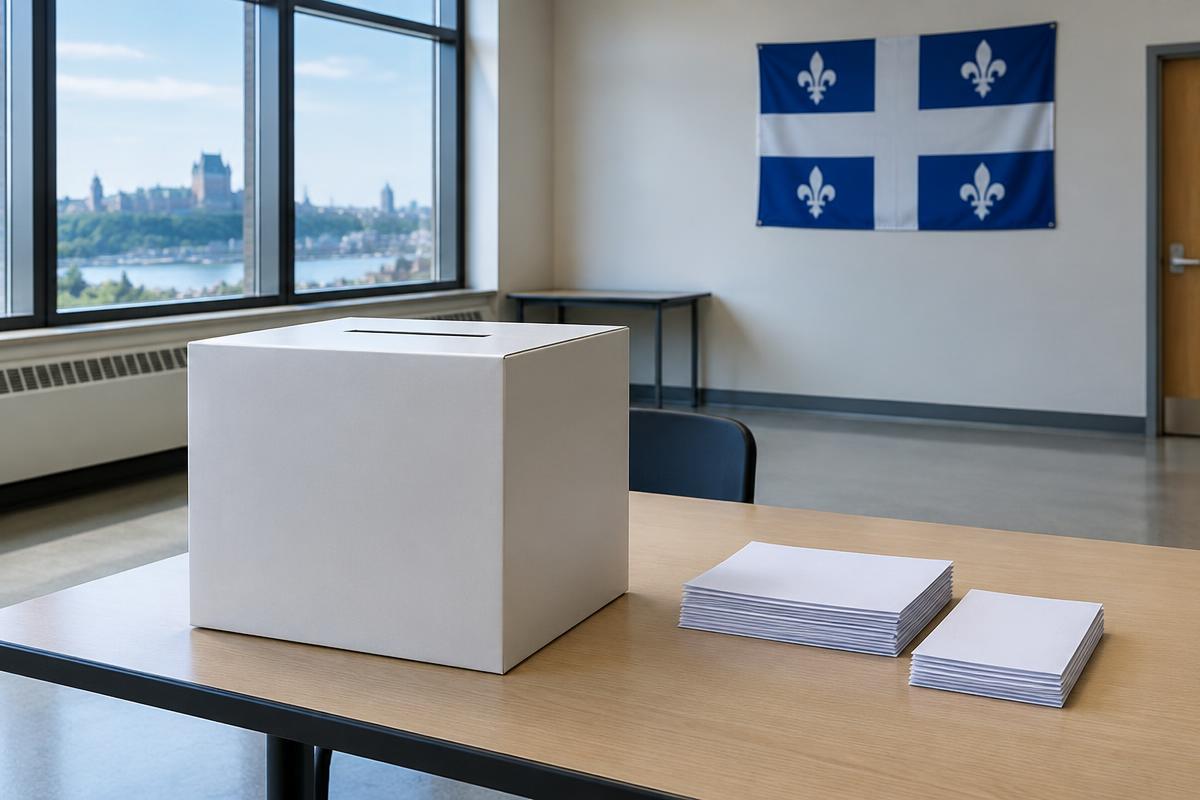
Quebec’s election campaign entered its final evening Sunday with the Parti Québécois leading the field and voters preparing to choose a government on October 5. The contest brings together five competitive parties, making the distribution of seats—and the possibility of a minority government—as important as the province-wide standings. No result had been declared at the time of publication.
The race follows eight years of Coalition Avenir Québec government. Throughout the campaign, parties offered competing answers to the cost of groceries, housing pressures, health care and education. CityNews reporting from Montreal on Sunday found those everyday concerns alongside questions about Quebec’s future in Canada, rather than one issue dominating every voter’s decision.
PQ Leader Paul St-Pierre Plamondon has promised an independence referendum during a first mandate. The Globe and Mail reported Sunday that he has ruled out holding that vote before the current U.S. presidency ends in 2029. That timetable places the referendum debate beyond Monday’s immediate decision about who should administer the province.
The distinction matters because support for a party and support for its constitutional objective are not interchangeable. Voters can seek a different government while disagreeing over independence. An election victory would authorize a party to govern; it would not itself answer a separate referendum question or establish how Quebecers would vote on one.
The presence of five viable parties adds uncertainty to the final seat count. In a constituency-based election, modest differences in local support can produce very different governing arrangements. Province-wide polling can describe the direction of a campaign without determining whether the leading party will command a majority in the legislature.
Monday’s count will settle who is best placed to form the next government. Until then, the appropriate distinction is between a polling lead and an electoral result. For Quebec and the rest of Canada, the next stage begins with the ballots—not with an assumption that either a majority government or a sovereignty mandate has already been secured.
politicsReportingCanada