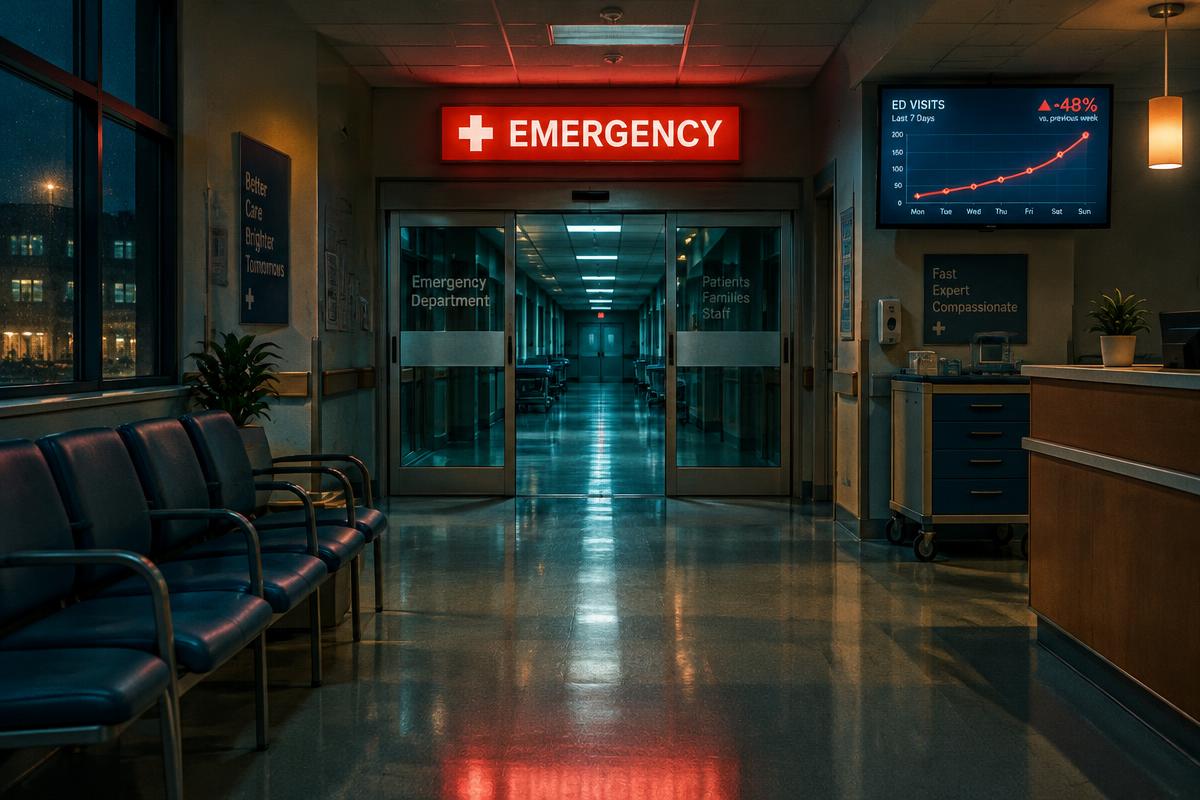
London and Middlesex County have recorded more opioid-related emergency department visits in the first eight months of 2026 than in all of last year, reversing a pattern of decline that had held since the height of the COVID-19 pandemic. CBC News reported on October 22 that there were 650 such visits from January 1 through August 30 — 150 more than in all of 2025.
Dr. Alex Summers, the Middlesex-London medical officer of health, described the partial-year figures as preliminary and cautioned that the progress made in recent years remains fragile. The uptick is the first of its kind since the pandemic era, when opioid-related harms surged across Ontario and much of the country.
Emergency department visits are one of the clearest real-time indicators of the toxic-drug crisis, capturing overdoses and other acute harms severe enough to require hospital care. A 30-per-cent jump over last year’s full-year total — with four months of 2026 still uncounted — suggests the local drug supply may be becoming more dangerous, or that more people are using alone or without access to supervised consumption and naloxone.
The regional figures arrive amid a broader provincial debate over how to respond to the crisis. Ontario has moved away from supervised consumption sites toward abstinence-based treatment hubs, a shift that public-health researchers and front-line workers have warned could increase exactly the kind of acute harms that show up in emergency departments. London’s numbers will be cited by both sides of that argument.
Public-health officials stress that one region’s partial-year data does not establish a province-wide trend, and the figures remain subject to revision. But for a community that had seen sustained declines, the reversal is a warning worth taking seriously: the conditions that drove the crisis — an unpredictable, increasingly toxic street drug supply — have not gone away.
healthReportingCanada